
Osceola County Wanted Fugitives
Start with the Osceola County Sheriff's Office Most Wanted page. That is the official home of the featured wanted posters. Fugitive work belongs to the Sheriff, not to Osceola County Corrections. The split matters. Corrections runs the jail and its custody tools, and its staff do not do warrant checks. Each poster shows a photo, the person's identity, and the charge. The images stay on the Sheriff's site rather than being copied here. The page changes over time. Some posters carry an "ARRESTED" stamp. That mix of statuses is why an old screenshot or a shared post cannot tell you if someone is still sought. The Sheriff posts no set list count and no update schedule, so doubt any fixed total or refresh promise. A separate monthly figure counts warrants served, not the size of the featured list. Open the live official page before relying on any poster.
Osceola Wanted Poster Details
A wanted poster from the Sheriff's office serves one job. It shows the public who is being sought and asks for tips. Think of it as a notice, not a court file. Some posters carry extra fields and a status stamp. Others stay bare. The live image is what counts. The core items here reflect what the official card itself displays, without inventing details every poster may lack.
| Poster field | What it means |
|---|---|
| Photograph | An agency-posted identification image on the Sheriff's official wanted page. |
| Identity | The name tied to the featured poster. Compare it carefully before sending information. |
| Alleged charge | The charge or warrant basis shown by the Sheriff. |
| Status mark | A visible “ARRESTED” mark means the poster has been updated, but current custody still requires a separate check. |
No poster tells the whole legal story. It will not list every filing, amended count, or hearing, and it says nothing about how a case ended. For that, turn to the Osceola Clerk record, which tracks what prosecutors filed and what the court decided. Names repeat in Osceola County, too. Match the poster and its case identifiers before assuming the first search result is the right person.
Photographs and status stamps live on the live Osceola Sheriff Most Wanted source. No wanted portraits appear here.
Note: A poster marked arrested does not state a court disposition or prove that the person remains in county custody.
Read Osceola Wanted Listings
Treat the wanted list as a public-safety notice rather than a tool for digging into people you know. Keep the official source first in any search. From there, separate four things: who the person is, how to report a tip, whether they are in custody, and where the case stands in court. Timing can wobble after an arrest. The Sheriff's poster may update before other county systems do, or after.
- Open the Sheriff's live Most Wanted page and confirm that the poster is still present.
- Read the identity and alleged charge exactly as displayed. Check for an “ARRESTED” status mark.
- If the person is recognized, do not approach, follow, contact, or try to detain them.
- Send nonemergency information to OCSO or use Central Florida CrimeLine for the anonymous tip route.
- For an immediate threat or emergency, call 911 and follow the dispatcher's directions.
Once an arrest is reported, the custody question shifts to Osceola County Corrections. The county booking and roster paths can reveal whether someone sits in Corrections custody now. They can also show whether a past arrest led to jail time. What if the roster shows nothing? That can mean release, a processing delay, custody elsewhere, a name spelled differently, or no booking at all. It does not erase the warrant or the poster history behind it.
Check Osceola County Warrants
Osceola County handles warrant checks by phone, not by portal. No verified public county site offers a dependable live name search. The county bond page states plainly that Corrections staff cannot tell you whether a warrant is outstanding. It points callers to the Osceola County Sheriff's Office Warrants line at 407-742-6515. The Sheriff's own directory lists that number under Warrants. Browsing the featured wanted list is different, since plenty of warrants never get a poster at all.
Before dialing, confirm the line through the Sheriff's official phone directory. The Osceola Clerk case query can add docket context. But nobody advertises it as a real-time warrant database. Docket entries run late, sit under seal, or resist easy reading. If a warrant might bear your own name, talk with an attorney or the court and respond the lawful way. No online list is a shield against being served.
- Gather the exact legal name and any case number already known.
- Call OCSO Warrants at 407-742-6515 for the official phone check.
- Use the Clerk record only for case context, not as a substitute for live confirmation.
- If the warrant may concern you, contact counsel or the proper court about safe resolution.
The directory screenshot below documents the official access channel. When accuracy matters, check the current OCSO directory entry yourself.
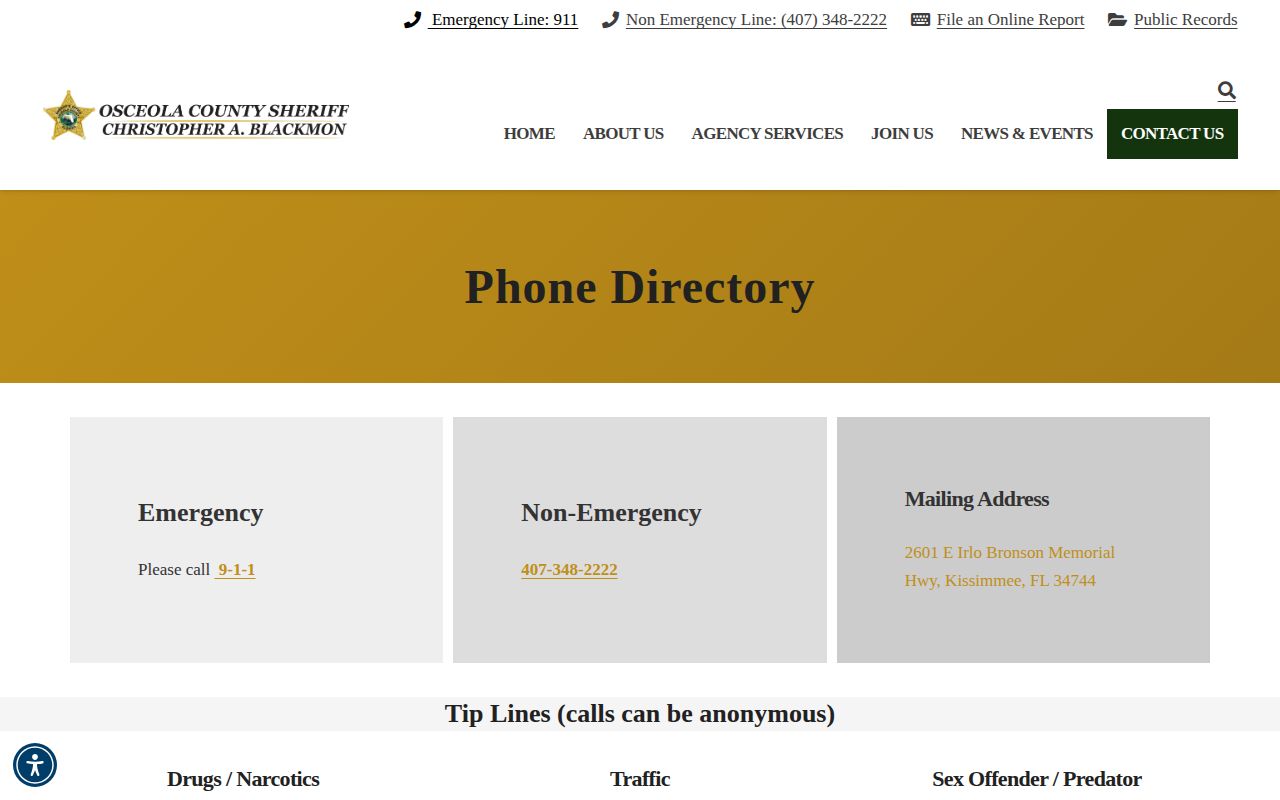
This directory view backs the phone route described above. It also keeps a court search from being mistaken for a live warrant portal.
Note: Corrections can answer custody questions, but the agency directs live Osceola warrant checks to the Sheriff's Warrants line.
Osceola Warrant Record Types
One word, several meanings. "Warrant" covers more than one kind of unresolved process. The Sheriff's access route does not promise a uniform label for whatever a caller hears back. The wanted page, meanwhile, does not sort every county warrant into one tidy public table. These distinctions simply help a caller ask the right office the right question, without guessing at anyone's legal status.
| Record type | Practical meaning | Best confirmation |
|---|---|---|
| Arrest warrant | Judicial authority to arrest tied to an alleged offense. It still does not establish guilt. | OCSO Warrants, then the related Clerk case when available. |
| Court or bench process | An unresolved order arising from a court matter, such as a required appearance or court direction. | The proper court or counsel, with the Clerk docket for context. |
| Featured wanted poster | A Sheriff-selected public notice about a person sought by the agency. It is not a separate warrant type or a complete list. | The live Sheriff Most Wanted page and OCSO. |
Know what each record shows. A warrant is a judge's authorization for police action, nothing more. It is not the case itself. The court outcome lives elsewhere, in the Clerk's file, where a later disposition records how the matter ended, whether by dismissal, plea, trial, or something else. Treat any wanted poster or news mention as a starting point. Then follow the paper trail. The public tools mark different stages of one process. A featured poster means the Sheriff is asking residents for help. A warrant confirmation means the office still reports an open legal process. A Corrections roster entry means the person is in county custody right now, including detainees housed outside the main jail. A Clerk case file means prosecution exists, but it says nothing about present custody. Mixing these up is how an old image gets mistaken for a live status report. Federal systems have their own boundaries. The Bureau of Prisons locator tracks federal inmates and shows no photos. Many federal pretrial detainees sit in U.S. Marshals custody away from BOP facilities anyway. ICE's locator covers civil immigration detention and also lacks a photo search. Turn to those only when a solid official source points to federal or immigration custody. They never replace the OCSO warrant line.
Osceola Wanted Tips and Safety
Public help should end at the phone call. Pass along what you know, then step back. Reach OCSO directly at 407-348-2222 for nonemergency information. Prefer anonymity? Central Florida CrimeLine takes tips at 1-800-423-TIPS, and CrimeLine alone decides who qualifies for a reward and on what terms. Not every tip earns one. Share concrete facts officers can act on, and let trained personnel handle the rest.
Osceola County Sheriff's Office2601 E. Irlo Bronson Memorial Highway
Kissimmee, FL 34744
Administrative: 407-348-1100
Nonemergency tips: 407-348-2222
Records: 407-348-1157
Anonymous CrimeLine: 1-800-423-TIPS
Some things should never be attempted. Do not visit a last-known address, probe whether someone is armed, follow their movements, or try to hold them yourself. If danger is immediate, call 911. Otherwise use the nonemergency or anonymous channel and keep the tip off social media. Public comments can tip off the fugitive, expose a witness, or spread a case of mistaken identity fast.
After an Osceola Wanted Arrest
Once an arrest happens, the lookup path shifts. The Sheriff may pull a poster down or stamp it. County Corrections may add a booking to the Daily Arrest Report and the current roster. Those two answer different questions. The daily report lists arrests that led to incarceration on a chosen date. The roster shows current custody and drops released people at its next update. Neither gives the final court result. From there the Ninth Judicial Circuit and the Osceola Clerk carry the case. Initial appearance handles bond and pretrial conditions, not the merits. Formal charges can stray from the booking wording. Arraignment notice follows once charges are filed. Read the current docket and final disposition before trusting an old wanted image. VINE can send custody-status notifications where supported, though it offers no booking photos and no court alerts. No verified official OCSO smartphone app provides a warrant or inmate-photo search. Sheriff social posts and county subscriptions share selected wanted notices, but they run incomplete, and a timestamp proves nothing about current status. The dependable sequence remains the browser-based Sheriff page, the official phone line, Corrections custody tools, and the Clerk docket.
Note: A capture ends the search phase, not the court case; the filed charge and final disposition can differ from the poster.